

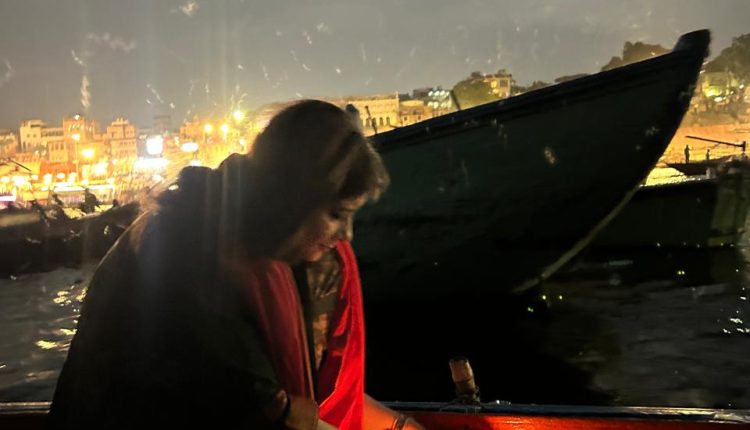
There was a time I believed holding on was a form of care. It was care for memories, for effort, for the version of me that once needed all of it. My cupboards held more than clothes (though they still do, now held with little more awareness). My shelves carried more than objects. They held proof of who I had been, what I had invested in, what I might still become.
And yet, somewhere between full drawers and a full mind, I began to feel crowded.
The shift didn’t arrive dramatically. It came quietly, one morning, as light fell on a shelf I hadn’t truly seen in months. I picked up something I hadn’t used in years and asked myself, Would I choose this again today?
The answer surprised me not because it was “no,” but because it came with relief.
That’s when I understood: letting go is not a loss. It is liberation. I had heard and read about it many times before, but when it happens, it can be life-changing.
I had been holding on out of habit, not intention. Out of fear, not need.
“This reminds me of who I was.”
“What if I need this someday?”
“Letting go feels wasteful.”
But what I wasn’t asking was: Does this support who I am now?
The choice is to lead life in fear or in trust in the bigger picture the universe is developing for each of us, depending on the lessons we choose to take or ignore.
So I began, not with a grand purge, but with a single drawer.
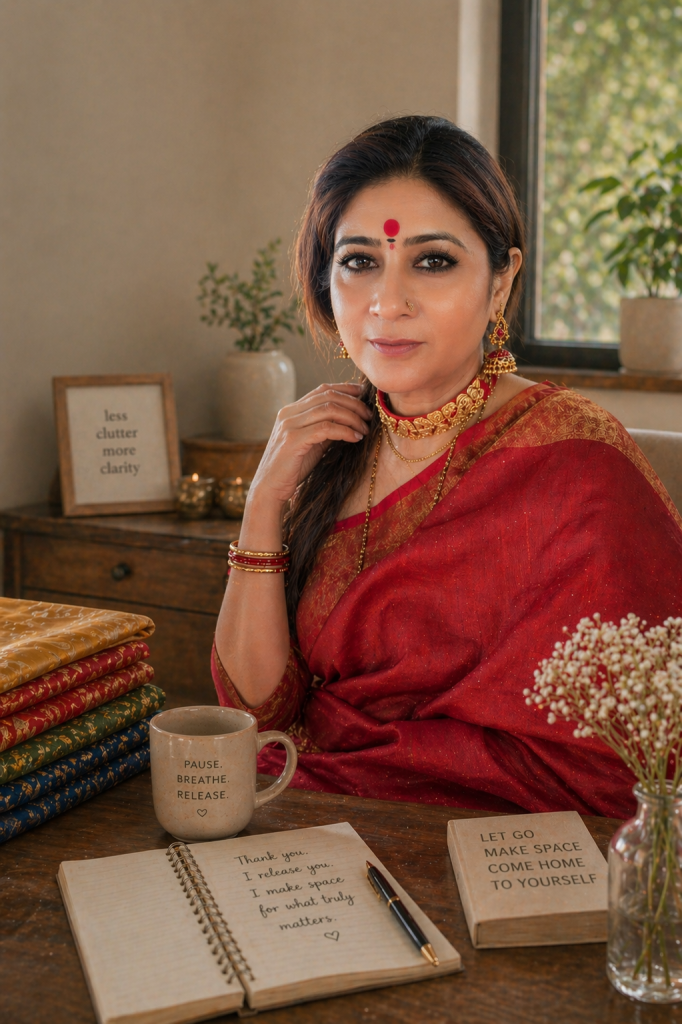
I lit a candle, not for ritual, but for presence. And as I touched each item, I paused. Not to judge, but to acknowledge. Some things carried gratitude. Some quiet guilt. Some, just inertia.
And with each release, I whispered softly, almost instinctively:
Thank you.
I release you.
It wasn’t just physical.
Sometimes, physical is not as important as mental and emotional aspects of the stuff we have kept ‘safely’ for years.
I began to notice the emotional spaces I was still holding on to, the people, the roles, the versions of connection that had quietly shifted with time. Some relationships had mattered deeply then. Some still do, just differently. Even in parenting, I realised, there are phases; there was a time my children needed me in ways they no longer do. Life moves. It is, after all, a motion.
And yet, within that motion, we rarely pause.
We carry people in the form of memories, conversations unfinished, or simply how they once made us feel. Not all of it is heavy; some of it is beautiful.
Letting go of people, or rather, of the version of them we hold on to, doesn’t come easily. There is tenderness in it. A quiet resistance. A question of loyalty.
But I am learning that release does not mean erasure. It means allowing things to take their rightful place in time.
I practice pause.
Every now and then, I sit with what feels full, an old memory, a lingering emotion, a thought that keeps returning, and I ask: Is this still mine to carry?
Some days the answer is clear. Some days it isn’t. But slowly, with awareness, I am learning to loosen the grip.
Because memories, good and not-so-good, live within us, and when objects, people, or even thoughts are tied to them, they can quietly take up emotional space. Releasing the trigger often softens the hold.
It is not a one-time act. It is an everyday practice. I still find myself over-giving at times. Saying yes to avoid discomfort. Carrying expectations that aren’t mine.
But now, I return to a simple reminder: “I choose alignment over approval.”
Even my thoughts are learning to take up less space. The loops of self-criticism. The replaying of conversations. The imagined outcomes. And when they come, I meet them with a little more distance:
This thought does not need my attention. The moment one becomes a spectator to feelings and emotions, it feels empowering. My spiritual classes work as reminders in the practice.
Minimalism, I’ve learned, is not about having less. It is about needing less to feel whole.
It is about releasing without guilt. About trusting that what leaves creates space, not emptiness, but ease. And in that space, something softer arrives.
In my Suburb life, nothing outwardly dramatic has changed. The same streets, the same routines. But inside, there is more room now.
And yet, in the spirit of full honesty, my sarees and I remain in a very committed relationship. I may pause, reflect, and release… but clearly not that much. I still buy them, now with a little more awareness and a lot less guilt.
Discover more from Suburb Life
Subscribe to get the latest posts sent to your email.

Great thoughts Vineeta.
This is great line : Minimalism, I’ve learned, is not about having less. It is about needing less to feel whole.
Loved every word , transformation happens like a butterfly 🦋