There are colours we see, and colours we feel. Personally, red is one of the colours with the strongest vibration. In the Indian context, the colour red carries emotional, cultural, and spiritual weight. It is the colour of vermilion, the bridal saree, the lal tilak, the sacred thread, the flame of the Diya, and the vibrant presence of the Devi. It speaks of love, passion, conflict, and power at once. For me, the colour red is a dense emotional vocabulary.
RED. RAW. SACRED with a thousand stories. So, when a red thread is tied around the wrist during Raksha Bandhan, it is perhaps carrying a much larger story than the eye can see.
For senior artist and sculptor Gopal Namojoshi, red is first and foremost a colour of emotion. “Red is the colour of love, force and royalty,” he says. “Perhaps its deepest connection is that it is the colour of blood.” That association with blood gives red an elemental quality. The tradition of tying a Mouli (Kalava, the red thread on the wrist) symbolises that connection, a visible reminder of an invisible bond.
When a Thread Becomes a Promise
The fragile fibre around the wrist transforms into an expression of strength. Perhaps that is what makes the ritual endure despite changing times. In the real sense, Raksha Bandhan is, at its heart, about remembering our relationship with ourselves and our responsibility to nurture the bonds that make our lives beautiful.
For Dr Manmit Kumarr, founder of the Kali code and spiritual coach, “The Devi is not just a deity we worship; She is an energy we awaken within ourselves. Red carries that Shakti, the Feminine Force. It is the colour of life force, courage, passion and transformation. To me, invoking the red of the Devi is a reminder to step into our own power and have the courage to transform.”
“As an artist, I see this transformation as a beautiful alchemy, where the simplest material absorbs stories, blessings and love. It reminds me that meaning is not always inherent in an object; sometimes it is the human heart that turns the ordinary into something sacred,” says Minisha Bhardwaj, founder of Misha Arts.
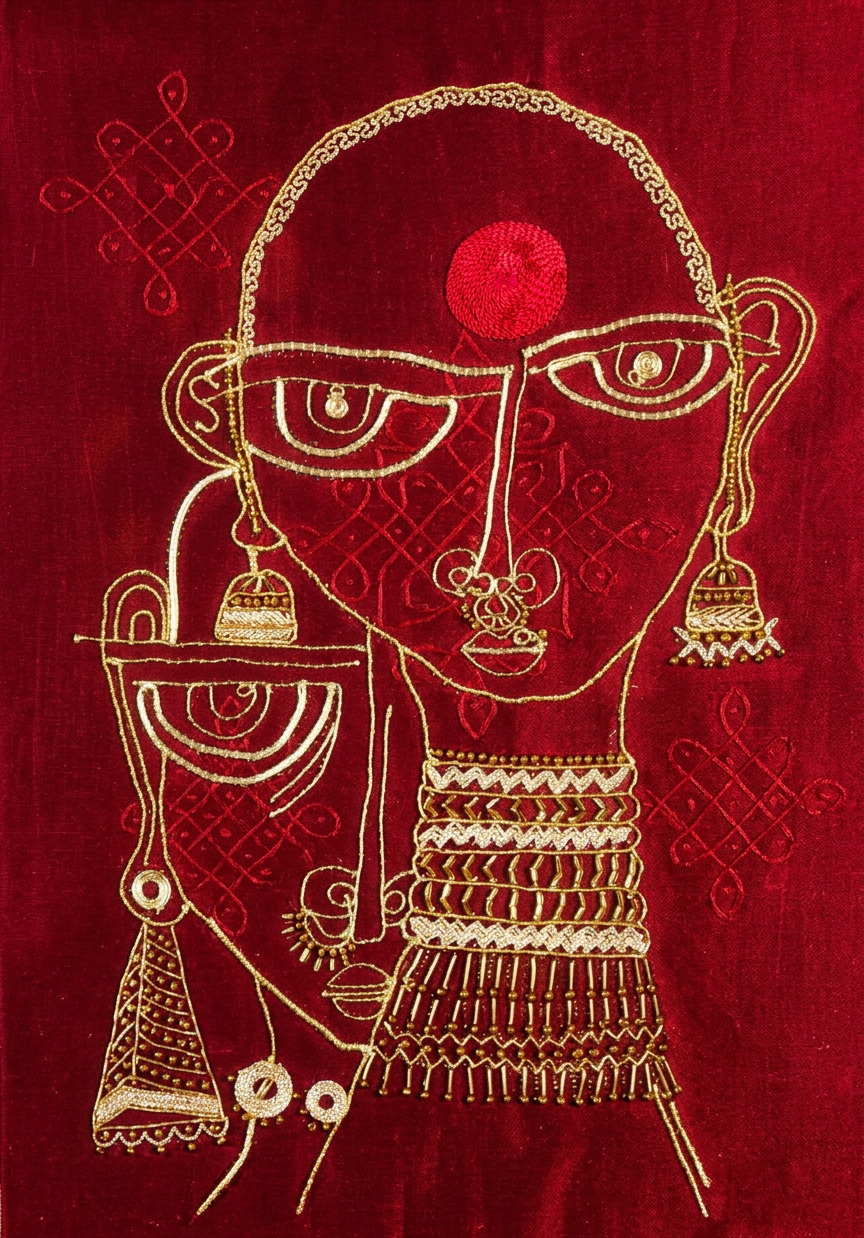
Different regions, different stories.
The tradition of Raksha Bandhan itself is not as uniform across India as we sometimes imagine. In parts of South India, sacred threads associated with the festival can extend beyond the brother-sister relationship, with even fathers receiving the thread. In Maharashtra, Narali Purnima is associated with the sea and the fishing community. Coconut offerings are made to the sea as the community marks the return to the waters.
In Odisha, traditions around Ganga Purnima bring their own cultural expressions and rituals. In Bengal, Jhulan Purnima celebrates the divine swing festival associated with Radha and Krishna, filling the season with devotion, music and colour. Different traditions, one universal thread: reaffirming connection.
The Sacred Language of Red
Namojoshi points to its traditional association with the third eye, an idea of awakening, inner vision and awareness. For an artist, this makes red particularly fascinating. On a canvas, red rarely sits quietly. It demands attention. A single red stroke can alter the emotional temperature of an entire composition. It can suggest love in one painting, anger in another, devotion in a third and sacrifice or sensuality in another, depending on how it is placed within the composition
Perhaps that is why red has remained so powerful in Indian visual culture. It does not merely decorate a ritual. It gives the ritual an emotional vocabulary.
Discover more from Suburb Life
Subscribe to get the latest posts sent to your email.