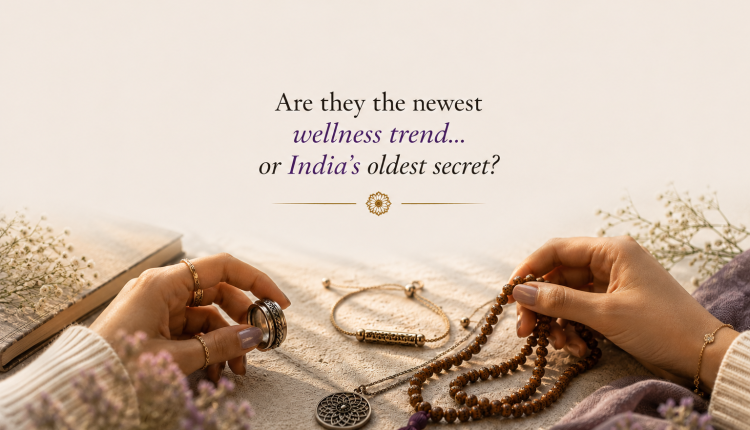
Uncover the surprising connection between today’s anti-anxiety jewellery trends and India’s ancient Japa Mala, revealing how old wisdom offers modern calm.
Before there were spinner rings, there was the Japa Mala. Reading about the latest fashion trend, which even ultra-luxury fashion houses have recreated and marketed as ‘anti-anxiety jewellery’. Is this latest wellness accessory really new? I think for the new storytelling, it has simply found a new audience. For centuries, Indians have gently moved prayer beads while chanting mantras, creating rhythm, calming the breath and quieting the mind.
It’s ancient wisdom wearing modern jewellery.
The fingers constantly move. They tap on tables in meetings, scroll through social media endlessly, and drum on steering wheels at traffic lights. They reach for a phone repeatedly, almost automatically. This might be why the latest trend in jewellery isn’t just for looking at; it’s made to be touched and fiddled with, satiating the restless mind.
The latest fashion market is thumping for the new baby on the block. Spinner rings that rotate with the flick of a thumb. Bracelets with movable links. Pendants that encourage slow, mindful breathing. Jewellery that doesn’t just decorate the body; it gives anxious hands something meaningful to do.
The science behind
Psychologist Dr Roma Kumar explains that repetitive tactile movements rolling a ring, moving beads or tracing textured surfaces help interrupt cycles of anxiety. These simple actions redirect attention to the present moment, offering the brain a sense of rhythm and predictability when thoughts become overwhelming.
Luxury jewellery houses have also embraced movement. Brands such as Cartier have experimented with flexible designs and kinetic elements that invite interaction rather than passive admiration. But somewhere between designer boutiques and viral Instagram reels, India smiles quietly.
Look back!
Long before breathing pendants, spinner rings appeared in luxury collections, there was the japa mala and rosary beads. For centuries, people across India have moved bead after bead through their fingers while softly chanting a mantra. It was never marketed as anxiety relief. There were no influencers demonstrating its benefits. No hashtags. No wellness campaigns. Yet it quietly performed what neuroscience is only now beginning to explain.
Our fingertips contain one of the highest concentrations of sensory nerve endings anywhere in the body. Every gentle movement across a bead sends signals through these receptors to the brain. The repetitive motion, paired with slow breathing and rhythmic chanting, gradually shifts the body away from stress and towards calm.
I personally endorse the benefits of chanting with beads. It enhances mindfulness of the present moment, deepens breathing, relaxes tense muscles, and stabilises the heartbeat. The philosophy remains unchanged. Only the packaging evolves. Maybe our grandparents weren’t merely praying. Maybe they were regulating their nervous systems long before science gave it a name. In the race to modernise our lives, we often abandoned practices because they appeared old-fashioned.
Since one size doesn’t fit all, the core recipe stays the same, but plating has evolved!
And maybe the most profound trend of this decade is not that jewellery has started moving. It is that, through those tiny movements, we are slowly finding our way back to stillness.
Discover more from Suburb Life
Subscribe to get the latest posts sent to your email.