
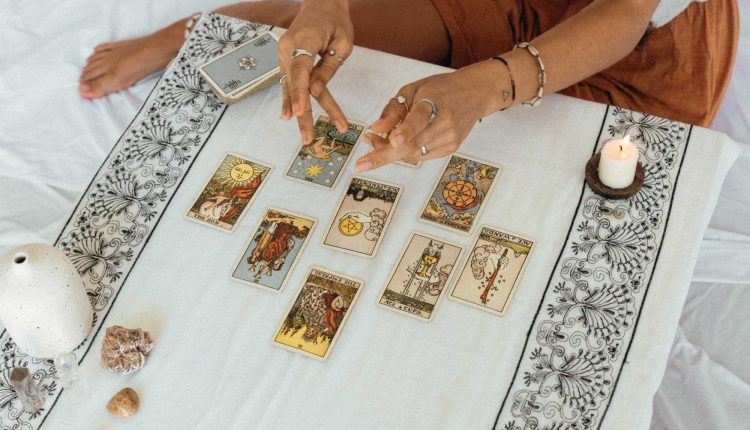
A beginner’s guide to cleansing your first Tarot deck — and why the real cleansing begins within
Tarot is not a language that can be mastered from the pages of a book. It is a language of intuition, silence, symbolism and lived experience. It isn’t about remembering the meanings of 78 cards; it’s about recognising energies that show up with experience and trusting the inner voice through grounding.
Long before my journey as a holistic wellness practitioner and Tarot reader started, I found myself deeply fascinated by the symbolism hidden within Tarot. The captivating artworks intrigued me. Nearly a decade ago, I had the opportunity to train under my spiritual mentor, Sujata Malik and what I imagined would be another healing modality slowly became an intimate conversation with myself.
I still remember her saying, which has stayed with me ever since: “Become friends with your cards. Don’t rush to read others. Let the cards first learn your energy, and you learn theirs. Trust the process.”
That one sentence changed my relationship with Tarot.
Like any meaningful friendship, trust wasn’t built overnight. I would draw a card every morning, not to predict my future, but to understand my present. Some days the message felt crystal clear. On others, it only made sense much later. Over time, I realised that Tarot isn’t about fortune-telling as much as it is about self-awareness and present energies.
Though the Rider-Waite deck is considered an easier deck to decipher, my first go-to learning was the Osho Zen Tarot. Its imagery spoke to me differently. It didn’t ask me to predict life; it invited me to observe it as I felt patterns unfolding.
Tarot is not about memorising the meanings of all 78 cards. It’s a misconception.
The same card can tell completely different stories depending on the person sitting across from you, the question asked, their emotional state, and the intuitive space from which you are reading. Tarot is less about intellectual knowledge and far more about energetic presence.
This is also why I gently encourage anyone stepping into healing work to first practise thoroughly on themselves.
Whether it is Reiki, NLP, EFT, Tarot, or any other healing modality, experience should always come before expertise. When we work on ourselves first, our guidance becomes authentic rather than rehearsed. We stop speaking from information and begin speaking from lived wisdom.
In today’s world, I see many, especially women, eager to learn Tarot and quickly turn it into a commercial offering. There is absolutely nothing wrong with building a profession around a skill. I believe healing deserves reverence. The cards respond beautifully when approached with humility rather than urgency.

And that brings me to something many beginners overlook: the importance of cleansing a Tarot deck.
People often ask me, “Do I really need to cleanse a brand-new deck?” Yes.
A deck travels through many hands before it reaches us, from the printing press to packaging, warehouses, transport, shops, and finally into our homes.
Here is what I recommend to beginners.
- Smoke cleansing remains one of my favourite practices. Pass the deck gently through the smoke of incense or organic sage. As the smoke rises, I imagine every borrowed energy dissolving, leaving only openness.
- Placing your deck and dowsing pendulum under the light of a full moon night can be energising. The moon has long symbolised intuition and reflection.
- Crystals such as Selenite and Clear Quartz make wonderful companions. I often place Selenite over my deck between readings to symbolically clear and refresh the energy before the next session.
- Another simple practice my mentor taught: hold your deck in your non-dominant hand, knock gently on the top three times, then shuffle thoroughly. Sometimes, intention carries far more power than elaborate rituals.
Before every reading, I spend a few quiet moments grounding myself. A few conscious breaths. A brief prayer. An intention to become an instrument rather than an interpreter. Tarot, like other healing modalities, is not learned, but lived.
The cards simply hold up the mirror. And if we are ready to look, they often reveal that the answers we seek have been waiting inside us all along.
Discover more from Suburb Life
Subscribe to get the latest posts sent to your email.